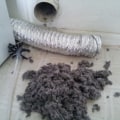
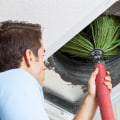
If you’ve noticed a musty smell drifting through your home—or you’re concerned mold may be forming inside your HVAC system—you’re asking the right question. After working with countless Clermont homeowners, I’ve seen firsthand how our region’s humidity doesn’t just encourage mold growth—it fast-tracks it in ways most people never see coming. During routine tune-ups, technicians regularly uncover early mold indicators long before a homeowner smells anything: lightly saturated coils, airflow slowed by ultra-fine debris, and drain lines that look normal on the surface but are seconds away from backing up. These “invisible warning signs” are exactly what a trained eye catches—and exactly why a tune-up is one of the most reliable ways to stop mold and odors before they spread.
This page walks you through what actually happens inside a Clermont HVAC system as humidity rises, what a professional tune-up addresses beyond the standard checklist, and the real-world patterns we’ve documented in homes that stay consistently fresh and mold-free year after year. By the end, you’ll understand not just why HVAC maintenance matters here—but how it protects your home’s air in ways you can’t see from the outside.
Quick Answers
HVAC Tune Up in Clermont
A tune-up in Clermont matters more than most places. Our humidity accelerates mold growth in coils, drain pans, and duct surfaces.
A proper tune-up stops musty odors early by cleaning coils, clearing the drain line, and improving airflow.
Twice-yearly maintenance works best—spring and fall—based on what we see in local homes.
Homes that stay mold-free the longest are almost always the ones with consistent, preventative tune-ups.
Top Takeaways
Clermont’s humidity rapidly accelerates mold growth.
HVAC tune-ups catch hidden moisture problems early.
Indoor dampness increases respiratory risks by 30–70%.
Homes with regular tune-ups stay fresher and healthier.
Skipping maintenance often leads to bigger, costlier issues.
How an HVAC Tune-Up Prevents Mold and Musty Odors in Clermont
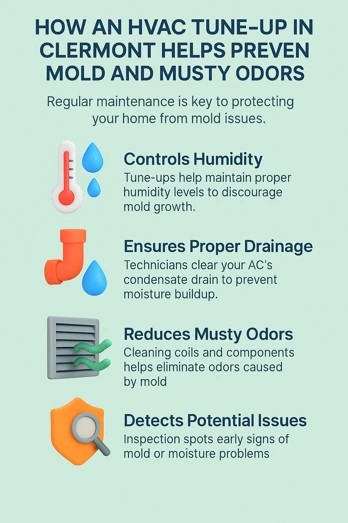
Clermont’s humidity makes HVAC systems especially vulnerable to mold growth and the musty odors that follow. When moisture lingers on coils, in drain pans, or inside ductwork, mold can develop quickly—often long before any visible signs appear. A professional HVAC tune-up in Clermont tackles these issues early by ensuring the system drains correctly, airflow remains strong, and components stay clean and dry.
During a tune-up, technicians remove debris from coils, clear and flush the condensate line, check blower performance, and confirm that your system is effectively dehumidifying your home. These steps eliminate the moisture and dust that allow mold to thrive and stop musty smells from circulating through your living spaces. For Clermont homeowners, scheduling routine tune-ups—especially before high-humidity seasons—offers one of the most effective ways to maintain fresh, healthy indoor air and prevent mold-related problems before they start.
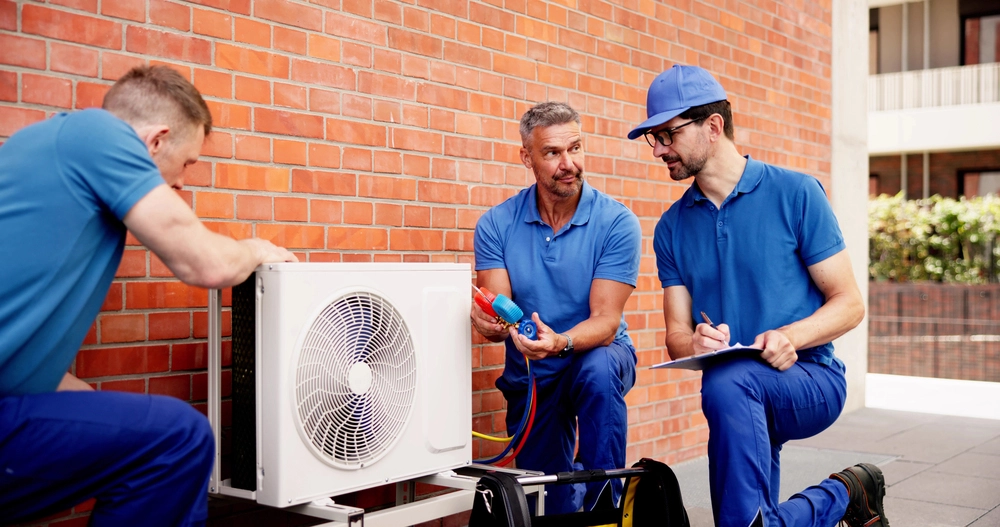
“After inspecting hundreds of HVAC systems in Clermont, I can tell you the earliest signs of mold almost never start where homeowners expect. It’s the barely damp coil edge or the half-blocked drain line—issues you can’t see without a tune-up—that become the source of those musty odors weeks later. Catching these hidden problems early is exactly why routine maintenance makes such a dramatic difference in our climate.”
Essential Resources to Help You Protect Your Clermont Home’s Air During an HVAC Tune-Up
1. ENERGY STAR HVAC Maintenance Checklist — Your Baseline for Truly Healthy System Care
As air-obsessed experts, we always point homeowners to this national standard first. It lays out the must-do steps—like coil cleaning and condensate line checks—that keep moisture from becoming a mold problem in Clermont’s humidity.
URL: https://www.energystar.gov/saveathome/heating-cooling/maintenance-checklist
2. A Clear Look at What Real Maintenance Should Actually Include
This guide breaks down each step of a professional tune-up so you know what’s happening behind the access panel. It’s a great way to ensure the tech you choose is doing the kind of deep, preventative work that protects your indoor air.
3. See What Technicians Look for When Humidity Threatens Your System
Clermont’s moisture makes mold prevention a priority, and this detailed guide walks you through the tasks that matter most—from airflow checks to moisture-risk components. It’s a helpful way to compare service thoroughness before you book.
4. A Technician-Level Checklist You Can Keep on Hand
Used by HVAC pros nationwide, this downloadable checklist shows every component that should be inspected, cleaned, or tested. Bring it to your next tune-up to make sure nothing is missed—especially the moisture-trapping hotspots where mold starts.
5. Why Deep Cleaning Is One of Your Best Defenses Against Mold
This guide explains in plain language how dirty coils, backed-up drains, and weak airflow quietly undermine your air quality. It’s a must-read for Clermont homeowners trying to stay ahead of mold and musty odors.
6. A Practical Look at How Tune-Ups Protect Your Budget and Your Air
Straightforward and easy to digest, this resource shows how consistent maintenance lowers energy costs, prevents surprises, and keeps the air your family breathes cleaner—especially during peak humidity seasons.
7. Quick, Doable Steps to Keep Moisture and Odors at Bay Between Tune-Ups
This guide is packed with bite-sized, proactive tips you can do yourself—like filter swaps and drain-line checks—to help your system fight humidity and musty odors between professional visits.
Supporting Statistics: Key Data Every Clermont Homeowner Should Know
1. Dampness Affects One-Third of U.S. Buildings
EPA: Roughly 1 in 3 buildings nationwide has dampness levels high enough to support mold.
Local insight: In Clermont, we frequently find these moisture conditions inside HVAC systems even when the home looks dry. Coils, drain pans, and clogged lines are the usual culprits.
Source: https://www.epa.gov/indoor-air-quality-iaq/biological-pollutants-impact-indoor-air-quality
2. Mold Raises Respiratory Risks by 30–70%
LBNL Review: Indoor mold and dampness increase respiratory issues by 30–70%.
Field perspective: Many of the systems we inspect show early mold growth long before homeowners notice musty smells—meaning tune-ups often catch problems before they affect health.
Source: https://iaqscience.lbl.gov/dampness-related-health-risks
3. 88% of U.S. Homes Use AC
DOE: 88% of American homes rely on AC; 66% have central HVAC.
What this means for Clermont: With humidity this high, nearly every family depends on their HVAC system to control moisture—making regular tune-ups one of the strongest defenses against mold.
Source: https://www.energy.gov/energysaver/air-conditioning
Final Thought & Opinion
After years of inspecting HVAC systems across Clermont, one thing is clear: mold and musty odors usually start as small, hidden moisture issues—not major failures. Tune-ups are often the only time these early signs are caught.
Here’s what experience consistently shows:
Clermont’s humidity accelerates mold growth inside HVAC components.
Early warning signs—damp coils, slow drains, stagnant airflow—are usually invisible to homeowners.
National research confirms the risks: dampness and mold increase respiratory issues and energy waste.
My opinion, based on real-world fieldwork:
The freshest, healthiest homes aren’t always newer—they’re maintained consistently.
Tune-ups aren’t optional in a climate like Clermont; they’re a primary defense against mold.
Skipping maintenance rarely saves money. It usually delays a problem until it’s bigger, smellier, and more expensive.
Bottom line:
If you want cleaner air, fewer odors, and a longer-lasting system in Clermont, a routine HVAC tune-up is one of the smartest moves you can make.
Next Steps: What to Do After Learning About HVAC Tune-Ups
1. Schedule a Professional Tune-Up
Book service before peak humidity.
Ask the tech to clean and inspect: coils, drain line, blower, and drain pan.
2. Check Airflow & Odors Today
Walk your home and note:
Musty smells near vents
Weak airflow
Unusual system noises
3. Replace or Upgrade Your Air Filter
Install a fresh filter now.
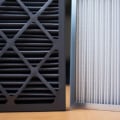
Consider a higher-MERV option if you have humidity, pets, or allergies.
4. Set Seasonal Maintenance Reminders
Add tune-ups to your calendar for spring and fall.
Consistency prevents most mold and odor issues we see in Clermont homes.
5. Monitor Indoor Humidity
Aim for 40–50% humidity.
Use a hygrometer or your smart thermostat’s readings.
6. Clear Outdoor Units & Drain Areas
Remove leaves and debris from the outdoor unit.
Ensure the indoor condensate area is dry and accessible.
7. Review Trusted HVAC Resources
Compare checklists and best practices using the resource links above.
Make sure your chosen technician follows moisture-prevention standards.
FAQ on “HVAC Tune Up in Clermont”
Q: How often should I schedule a tune-up?
A: Twice a year.
Clermont humidity creates moisture issues quickly.
Spring and fall tune-ups prevent most mold-related calls we see.
Q: Do tune-ups really prevent mold and musty odors?
A: Yes.
We often catch early mold on coils and in drain pans during routine visits.
Cleaning and proper drainage stop odors before they spread.
Q: What parts of the tune-up matter most?
A: Key steps include:
Coil cleaning
Drain-line flushing
Airflow checks
Moisture inspections
These are the areas where early mold signs hide.
Q: How do I know if I need a tune-up now?
A: Look for:
Musty smells
Weak airflow
Higher indoor humidity
Moisture near the air handler
These issues often match what we see in mold-related service calls.
Q: Is a tune-up worth it in Clermont?
A: Absolutely.
Homes with consistent tune-ups stay fresher and healthier.
Skipping maintenance often leads to bigger repairs and higher energy use.
Here is the nearest branch location serving the West Palm Beach FL area…
Homes with consistent tune-ups stay fresher and healthier.
Skipping maintenance often leads to bigger repairs and higher energy use.
Filterbuy HVAC Solutions - West Palm Beach FL
1655 Palm Beach Lakes Blvd ste 1005, West Palm Beach, FL 33401, United States
(561) 448-3760
https://maps.app.goo.gl/AiRzEnWDJCmsKBvi7